Editor's Note
Beyond Bokeh. The Ethics of a Closed Aperture25
Photograph
Daidō Moriyama
Written by
Marco Savarese, Editor-in-Chief

In the constant stream of images I review as an Eyeshot editor, the real difference isn’t technical. It’s between photographs that are simply pleasing and photographs that actually carry a story. And very often that difference starts with a technical choice that becomes a position: aperture.
Over the last years, bokeh has turned into an accepted shortcut in street photography. Wide-open lenses, erased backgrounds, subjects isolated as if they existed outside the world. It works. It seduces. It simplifies. But in street and documentary work this aesthetic is often a conceptual mistake. Blur the context and you remove the weight of what’s happening. A person at f/1.4 becomes an abstract feeling; the same person at f/8, placed inside their environment, becomes a document.
I’m not talking about blur as language. With someone like Daido Moriyama, out-of-focus isn’t decoration. It’s instability, tension, a deliberate rupture. What I see more often today is different. Extreme aperture used to make “interesting” what wouldn’t stand on its own.
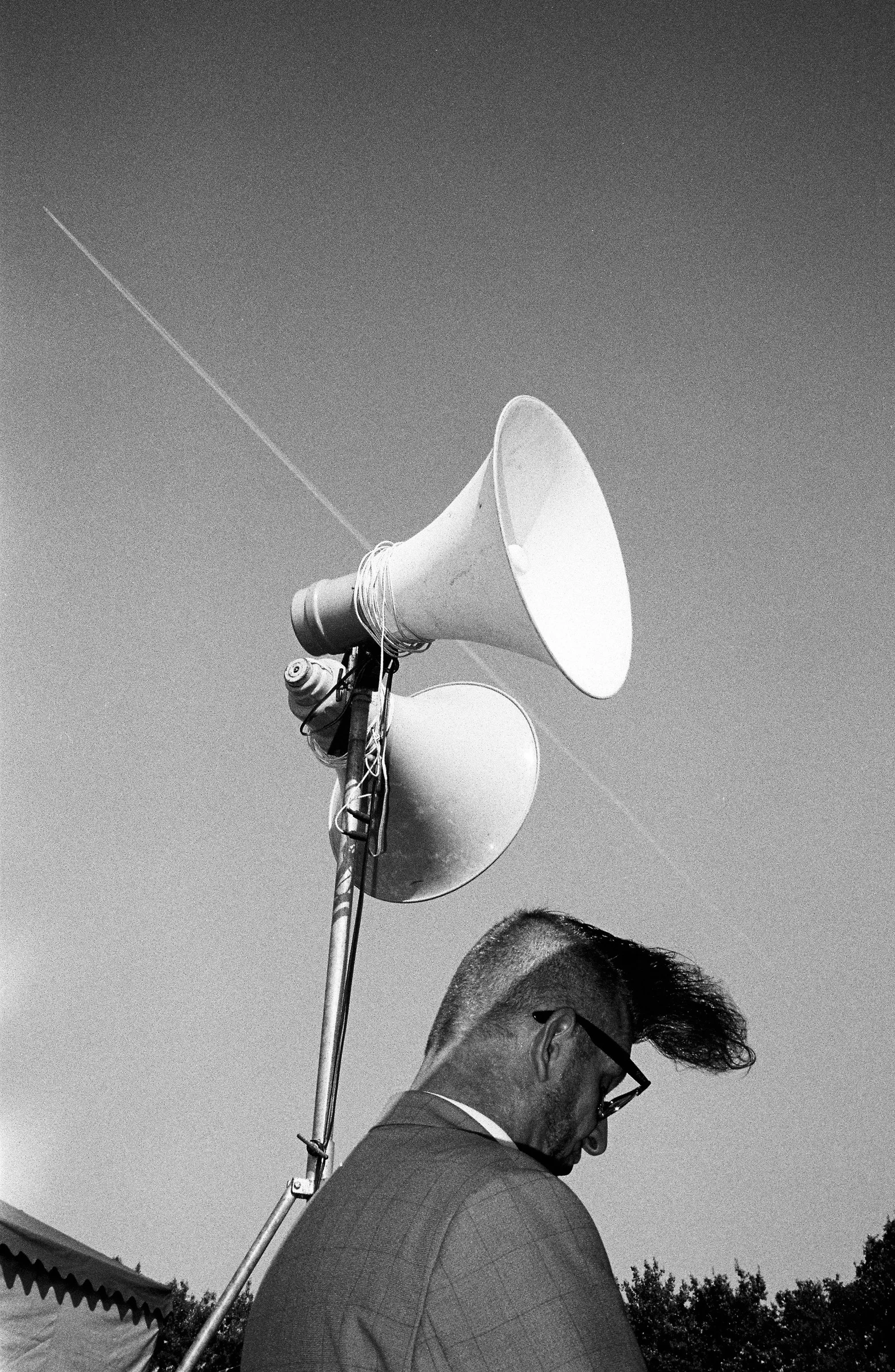
That’s why I keep looking for images shot at closed apertures, often with a 28mm or 35mm. At f/8 or f/11 photography becomes democratic, where foreground and background have the same right to exist. It forces composition, layering, multiple readings. Reality isn’t soft and selective. It’s dense, overlapping, contradictory. A photograph that simplifies it too much often betrays it.
There’s also a practical reason that becomes stylistic. Closed apertures reduce the obsession with focus and bring the body back, with position, timing, decisions. The environment returns as a character. Details stay readable. And these images age better. Depth of field turns a photograph into a visual archive; heavy blur often remains just an impression.
At Eyeshot I’m not looking for images that work instantly. I’m looking for images that hold. Closing the aperture isn’t nostalgia. It’s responsibility: admitting the world around the subject matters as much as the subject. It invites the viewer to read a photograph, not consume it.