

The sixth edition
Open Call
2026
- Photographs
- 11,997
- Series
- 669
- Countries
- 85
- Single image finalists
- 47
- Series finalists
- 18
Read by six jurors, printed in two issues of Eyeshot Magazine, Sequence and Frame.
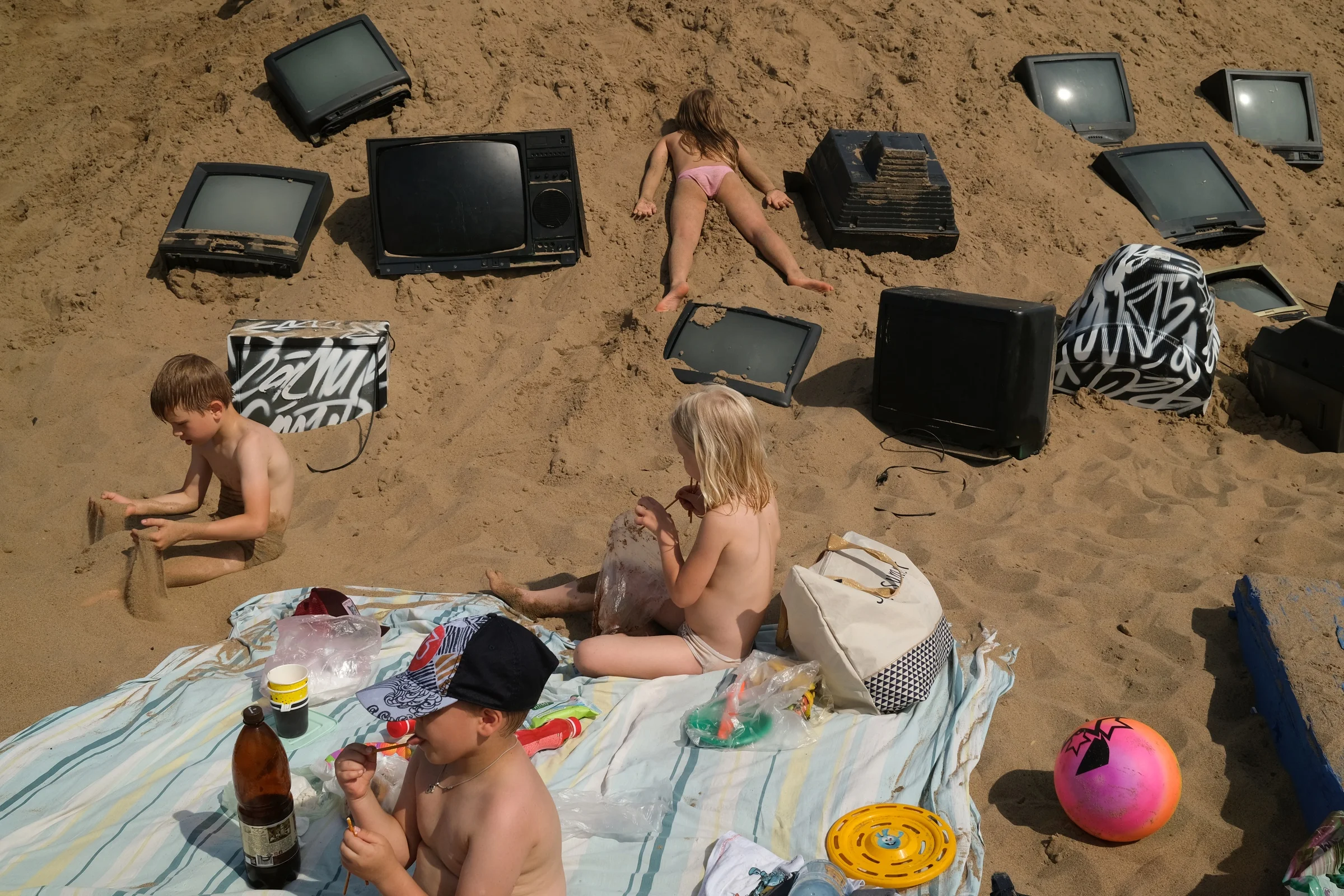
Photograph by Andrei Furnea
Single image winners
First, second and third placeSeries winners
First, second and third placeFirst place
Joseph Rodriguez, United States
Migrantes 1995-2006
In 1995, photographer Joseph Rodriguez and writer Rubén Martínez began a journey alongside a few families of migrants from the Indigenous village of Cherán, in the Mexican western state of Michoacán. This ethnographic project was loosely modeled upon Walker Evans’ and James Agee’s immersion into the lives of poor white tenant farmers in the Depression-era South. Martínez published a widely-praised work of narrative non-fiction, Crossing Over: A Mexican Family on the Migrant Trail, based upon this research.
Second place
Andrei Furnea, Romania
The Distance of a Song
There was a place in my childhood where I belonged to only temporary. A place of dusty roads, gardens and long afternoons, where my grandparents seemed as permanent as the landscape, and children I barely knew became my closest friends until vacation ended. Each year I returned to the same place, but never quite to the same world. And somewhere inside those days, I waited for my father. Sometimes he came. Often he didn’t.
Third place
Masoumeh Bahramigorji, France
Tears of Motherland
When I was a child, my uncle, a hunter, brought a taxidermized flamingo to our home as a gift. I remember the weight of its glassy eyes, it’s impossible stillness. I was afraid of it, yet it never left. Over time, that fear transformed into something deeper, a quiet, persistent dread for the land and water I grew up with, the places that raised me, now vanishing before my eyes. I grew up by the Caspian Sea, the world’s largest closed lake.
Honorable mentions
One by each jurorChosen by Marco Savarese
Dave Jordano, United States
Detroit Rediscovered 1972
Early in 1972, while as a twenty-four year old student studying photography at the Center for Creative Studies in Detroit, I began working with a 35mm camera where for approximately one year I photographed in and around the Detroit area. Some of these pictures I printed for school assignments, but for the most part I compiled a negative book full of work where I then stored them away and quickly forgot about them, never even bothering to make contact sheets.
Chosen by Newsha Tavakolian
Noemi Ehrat, Switzerland
The Abortion Plot
Abortion is a politically charged and polarised issue. When a government shifts to the right, access to reproductive health care is often restricted. Currently, many people are looking to the USA, where the Trump-administration is blocking reproductive rights. But changes are also underway in European countries and political-cultural debates are ongoing. While countries such as Poland or Liechtenstein have repeatedly rejected liberalising their laws, others like Sweden and the Netherlands maintain a more progressive approach.
Chosen by Bill Shapiro
Vassilis Zaverdas, Greece
Fragments
Small details, chance glances, stark shadows, light and darkness, traces, gestures, unexpected encounters, trivial incidents, and fleeting moments constitute the “subject” of Vassilis Zaverdas’s photographs, they make up his photographic universe. Everyday occurrences, seemingly insignificant, are transformed into photographic events through the creator’s gaze; he views them with a fresh, “alien” eye, as if seeing them for the very first time. Simple, everyday things, small fragments of space and time, become charged with new significance and acquire meaning within the photographic frame.
Chosen by Shin Noguchi
Mahmoud Abu Hamda, Palestine
After Survival
After Survival is a long-term documentary project about people in Gaza who survived bombardment but continue to live with its permanent consequences. It follows children, adults, and families whose lives have been reshaped by amputations, burns, spinal injuries, hearing loss, displacement, orphanhood, and the destruction of their homes. News coverage often ends when a person is pulled from the rubble or counted among the injured. This project begins where that coverage usually stops.
Chosen by Tavepong Pratoomwong
Andrea Fucà, Italy
Down World
“Down World” is a project that began in February 2022 with the aim of exploring and documenting the intimate lives of people with Down syndrome, also known as trisomy 21. Although many people understand that individuals with this condition can lead fulfilling lives, work, and form relationships, few are aware of the daily effort, family sacrifices, and educational and relational pathways required to achieve these goals.
Single image finalists
47 photographsSingle image finalist
Patrizia Calí, Denmark
Untitled
L.A. Glow, Los Angeles, December 2024 A gloomy night scene, capturing a characteristic L.A. back drop. A moment of stillness and tension that feels like a prelude of the fire and destruction that was about to come in the next days.
Single image finalist
Sebastien Durand, France
Untitled
Osmosis. Dog jumping on his master’s lap during a stop at a metro station. For a moment, the faces merge in a perfect osmosis between beings.
Single image finalist
Apostolos Kaloudis, Greece
Untitled
A legendary master in the art of taming eagles, Huanjol represents centuries of nomadic knowledge, a bond between man and bird once essential for survival in harsh winters.
Single image finalist
Somenath Mukhopadhyay, India
Untitled
Girls are taking face paint before their performance in a folk drama in rural Bengal. The art is known as bohurupee (taking many forms).
Series finalists
18 bodies of workMahmoud Abu Hamda, Palestine
After Survival
After Survival is a long-term documentary project about people in Gaza who survived bombardment but continue to live with its permanent consequences. It follows children, adults, and families whose lives have been reshaped by amputations, burns, spinal injuries, hearing loss, displacement, orphanhood, and the destruction of their homes. News coverage often ends when a person is pulled from the rubble or counted among the injured. This project begins where that coverage usually stops.
Tanzir Ahmed, Bangladesh
The Cost Of The Flood
In July 2026, southeastern Bangladesh was overwhelmed by its worst flash flooding in four decades. Record-breaking monsoon rain, 412.3 mm in Chattogram in 24 hours, combined with heavy mountain runoff, leaving Banshkhali, Satkania, Pekua and surrounding areas underwater for more than a week. More than 800,000 people were marooned, over 50 lives were lost and nearly 80,000 homes were damaged. In Banshkhali, where mud houses make up much of the rural landscape, entire homes collapsed, while livestock, fisheries and crops worth billions of taka were lost.
Jubair Ahmed Arnob, Bangladesh
The Place Where I Used To Play…
“What is the city but the people?” William Shakespeare. I often return, in memory, to a place where I once swam in a canal flowing into the Balu River, where friends gathered beneath sprawling trees, and where nature shaped daily life. That place is Green Model Town, a neighborhood in Dhaka, Bangladesh’s rapidly expanding edge. Today, it is almost unrecognizable, transformed beyond memory. The river has dried into a cracked canal.
Susanne Bartels, Germany
Mundo Aparte
MUNDO APARTE What holds a community together when formal structures are fragile or absent? Mundo Aparte traces the invisible architecture of belonging, the gestures of care, discipline, faith and everyday coexistence through which a community sustains itself. Children, boxers, animals and solitary figures inhabit a world shaped by resilience, intimacy and contradiction. This world is La Perla, situated between the fortified walls of Old San Juan and the Atlantic Ocean, geographically close to the city, yet historically pushed beyond its boundaries.
James Whitlow Delano, Japan
Duterte’s Teen Widows & Those Left Behind
One night in 2017, Jazmine Durana, then 15, slept with her husband, Toto, in a plywood hut, raised on posts over a contaminated estuary in a Manila slum. In all, 11 lived under one leaky roof. Baby Hazel slept between them when two assassins in balaclava thrust guns to their heads, one telling Jazmine they’d kill her if she moved, while the other dragged Toto by the hair onto a wooden porch, shooting him a total of four times in the face and mouth.
Mara De Sario, Belgium
Lupa
The figure of the she-wolf is ambivalent, at once protective and maternal, and at other times devouring and driven by intense passion. It was upon reading the definition of the she-wolf, with all its inherent ambiguity, that the title for this series struck me with visceral force. I sensed a connection between these images, floating, intuitive fragments within me, and then I read this: “The she-wolf always carries an ambivalent symbolism. On one hand, it is positive; on the other, violent and frightening.
Marina Doctorova, Russia
The Happiest Time
Between 2015 and 2017, I immersed myself in and photographed the Russian rave scene in St. Petersburg, a deeply underground culture shaped by the social-media generation. While Moscow’s raves attracted crowds of thousands, St. Petersburg existed in the shadows. In 2015, my friends launched a project called “dopewvlk”, dedicated to documenting the city’s non-commercial yet forward-thinking club culture. They invited me to photograph some of the most unusual and unconventional parties taking place across St. Petersburg.
Noemi Ehrat, Switzerland
The Abortion Plot
Abortion is a politically charged and polarised issue. When a government shifts to the right, access to reproductive health care is often restricted. Currently, many people are looking to the USA, where the Trump-administration is blocking reproductive rights. But changes are also underway in European countries and political-cultural debates are ongoing. While countries such as Poland or Liechtenstein have repeatedly rejected liberalising their laws, others like Sweden and the Netherlands maintain a more progressive approach.
Andrea Fucà, Italy
Down World
“Down World” is a project that began in February 2022 with the aim of exploring and documenting the intimate lives of people with Down syndrome, also known as trisomy 21. Although many people understand that individuals with this condition can lead fulfilling lives, work, and form relationships, few are aware of the daily effort, family sacrifices, and educational and relational pathways required to achieve these goals.
Hazel Hankin, United States
Coney Island: 1970s-1980s
As a child growing up in Brooklyn, Coney Island was a place of wonder to me. Alluring, a little bit scary, it was a world that seemed to exist completely outside of normal life. When I became serious about photography in the 1970s I made Coney Island the subject for my first long-term project. I spent the summer of 1977 shooting there, developing the film and making prints in my darkroom at home.
Murat Harmanlikli, Türkiye
This Is Not an Istanbul Story
Margaret Atwood once wrote, “The one thing that we all have in common is that we all have stories to tell.” Yet, all my life, I have felt like a man without a story. I have no grand tragedies, no complete narrative carried from my past into the present. There is no remarkable tale I feel compelled to tell about my life. That is why, for years, I have wandered through the streets of Istanbul, searching for a story of my own with a camera in my hand.
Dave Jordano, United States
Detroit Rediscovered 1972
Early in 1972, while as a twenty-four year old student studying photography at the Center for Creative Studies in Detroit, I began working with a 35mm camera where for approximately one year I photographed in and around the Detroit area. Some of these pictures I printed for school assignments, but for the most part I compiled a negative book full of work where I then stored them away and quickly forgot about them, never even bothering to make contact sheets.
Rado Klose, United Kingdom
The Fens
These photographs were made at irregular intervals over a roughly 10-year period from 1972 onwards. They stretch from Cambridge and local villages in the south to the Lincolnshire Fens and Skegness in the north. They mix photographs made with Leica cameras and those I made later with 5×4 and 10×8 cameras, which were then my professional tools.
Davide Mantovanelli, Italy
Fragments of proximity: notes on border identity
I had been living in Armenia for about a year when I started thinking more about its borders. Armenians often say: “All of Armenia is a border.” I wanted to understand what that really means. I started noticing its presence everywhere, even far from the actual lines on the map. In people’s mindsets, food, landscapes, monuments, graves, mount Ararat and everyday life. Sometimes it was very visible. Sometimes it was just a feeling, or a story someone told me.
Santiago Mesa, Colombia
Jaidë
Among Colombia’s Indigenous communities, the Emberá people of Chocó face a suicide crisis shaped by decades of armed conflict, forced displacement, the loss of ancestral lands, domestic violence and institutional neglect. In Bojayá, 15 suicides were reported between 2015 and 2020. From 2021 to 2023, the number rose to 41 deaths, alongside more than 400 suicide attempts. At least 12 further deaths were recorded in 2024 and 14 in 2025. Yet the crisis continues, without a comprehensive record of its full extent or an institution ensuring sustained care.
Barbara Peacock, United States
Searching for the Same Light
Through moments of labor, routine, weather, sacrifice, community, and family life, the images capture the rhythm of the seasons, honest hard work, and the enduring connection between people, the land, and the animals they cherish. This journey brings the viewer to the kitchens, barns, fields, and gathering spaces of five farming families, where everyday gestures hold a quiet strength. These images embody the heart of rural Maine, authentic, timeless, and full of poignant moments found in everyday life, suggesting that even the smallest routines carry a deeper search for meaning.
Harvey Stein, United States
Haiti 1984
Haiti lives on the street. It sings, mourns, prays and survives in public -Anonymous Haitian Proverb In March 1984, I traveled to Haiti for the first and only time, alongside fellow photographers Bruce Gilden and Charles Gatewood. Our goal was to document the vibrant chaos of Carnaval. I had previously photographed Brooklyn’s Haitian community and felt drawn to the country through its culture, its people, and its spirit. We stayed eight days. I shot 27 rolls of black-and-white film.
Vassilis Zaverdas, Greece
Fragments
Small details, chance glances, stark shadows, light and darkness, traces, gestures, unexpected encounters, trivial incidents, and fleeting moments constitute the “subject” of Vassilis Zaverdas’s photographs, they make up his photographic universe. Everyday occurrences, seemingly insignificant, are transformed into photographic events through the creator’s gaze; he views them with a fresh, “alien” eye, as if seeing them for the very first time. Simple, everyday things, small fragments of space and time, become charged with new significance and acquire meaning within the photographic frame.
2026
- Marco SavareseChair of the jury
- Newsha TavakolianMagnum Photos
- Bill ShapiroFormerly LIFE
- Matt StuartUP Photographers
- Shin NoguchiUP Photographers
- Tavepong PratoomwongUP Photographers
The printed edition
Pre-order at €44.90 until 27 November. Shipping from March 2027.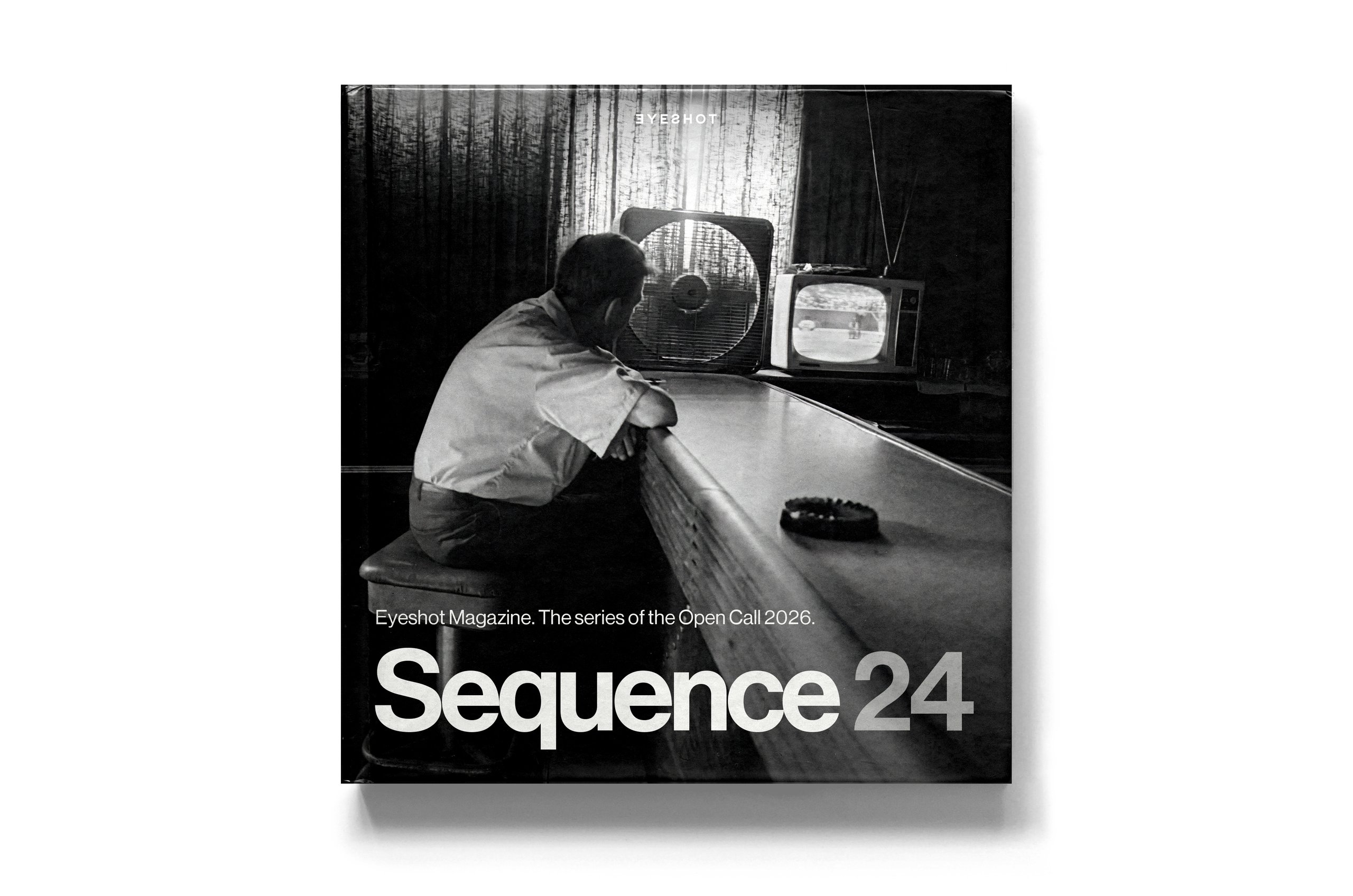
Sequence24
Eyeshot Magazine. The series of the Open Call 2026.
Edited by Marco Savarese, Editor-in-Chief
€44.90
Pre-order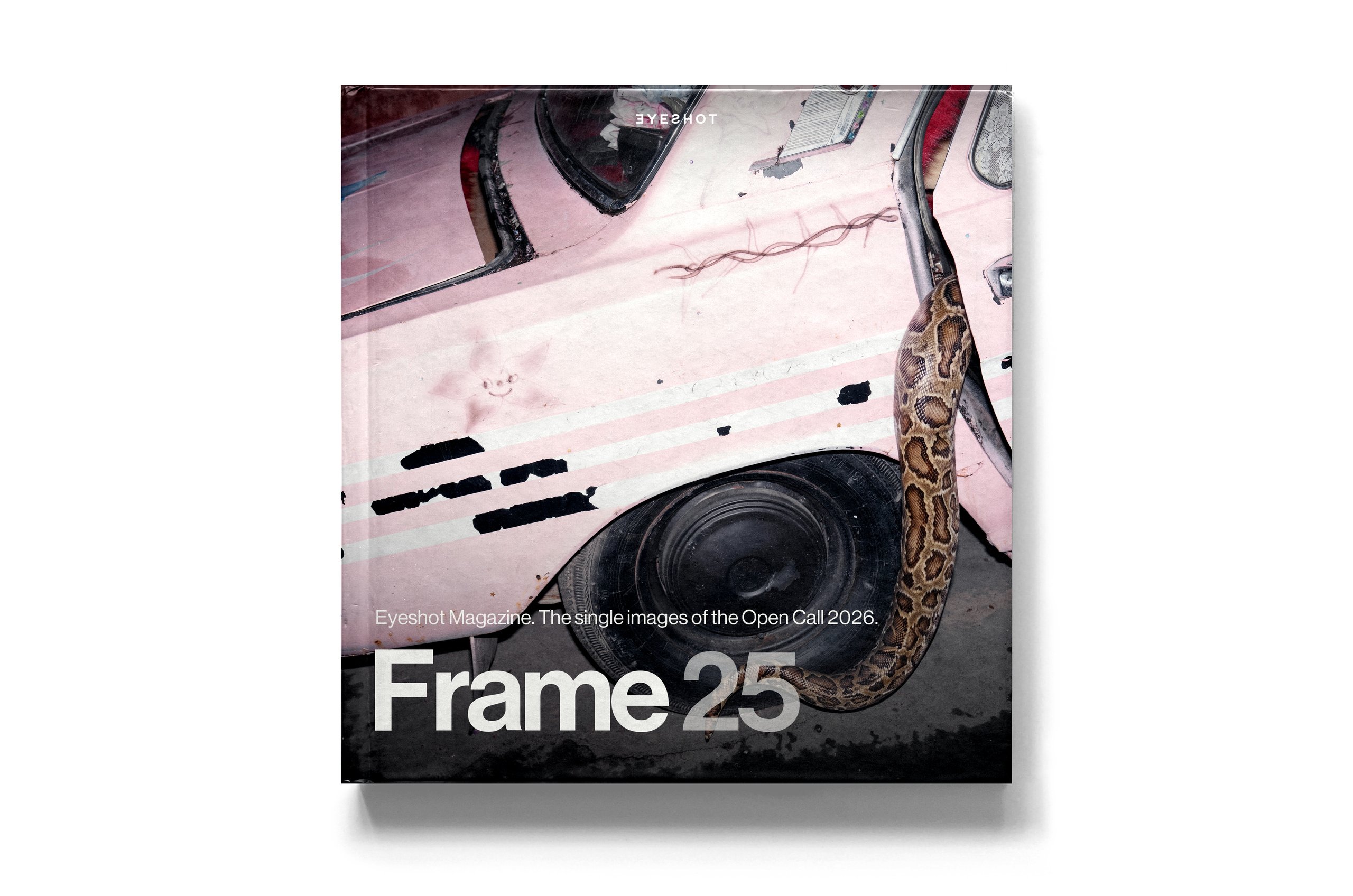
Frame25
Eyeshot Magazine. The single images of the Open Call 2026.
Edited by Marco Savarese, Editor-in-Chief
€44.90
Pre-orderEvery edition
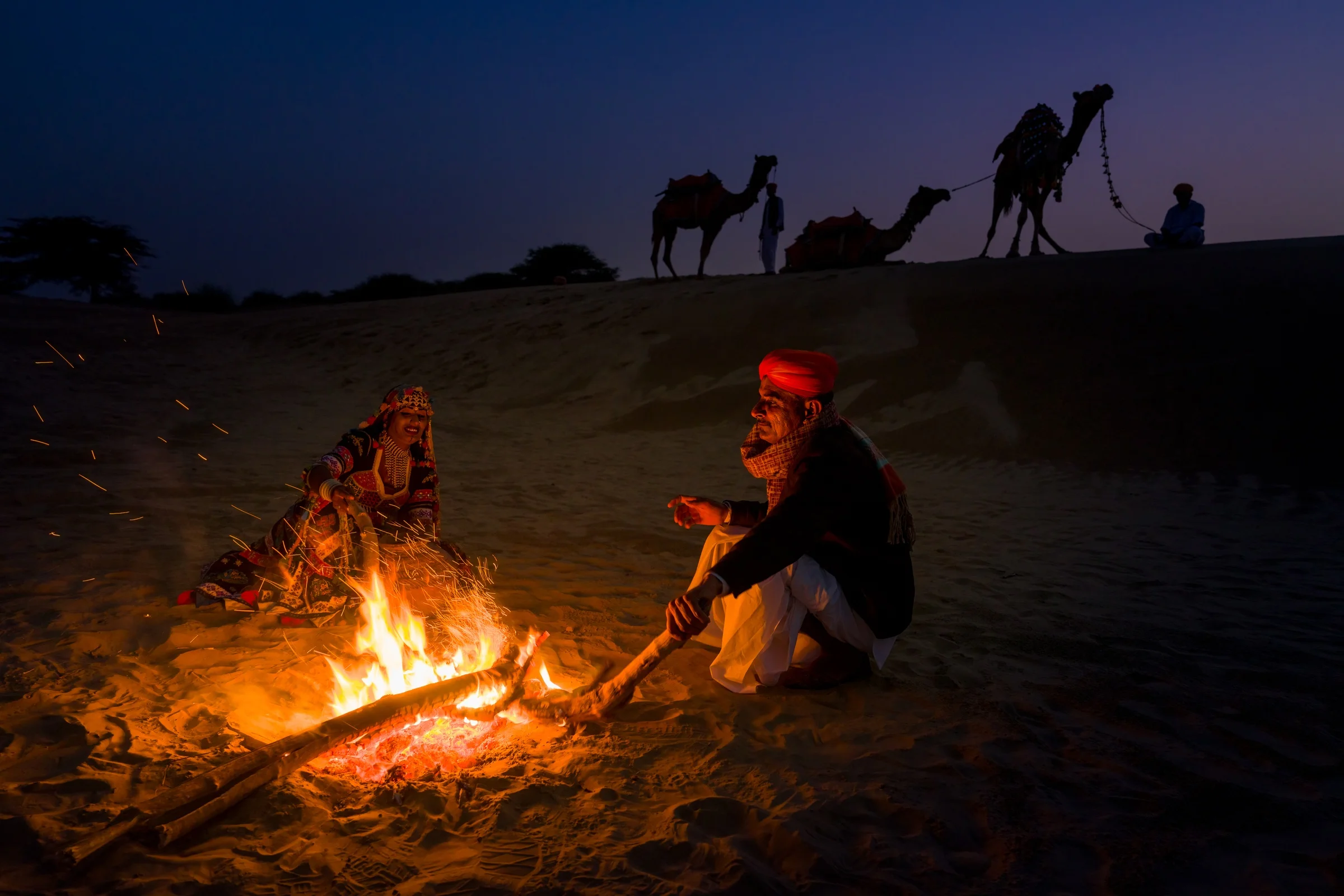
Since 2021 Open Call 2025Fifth edition
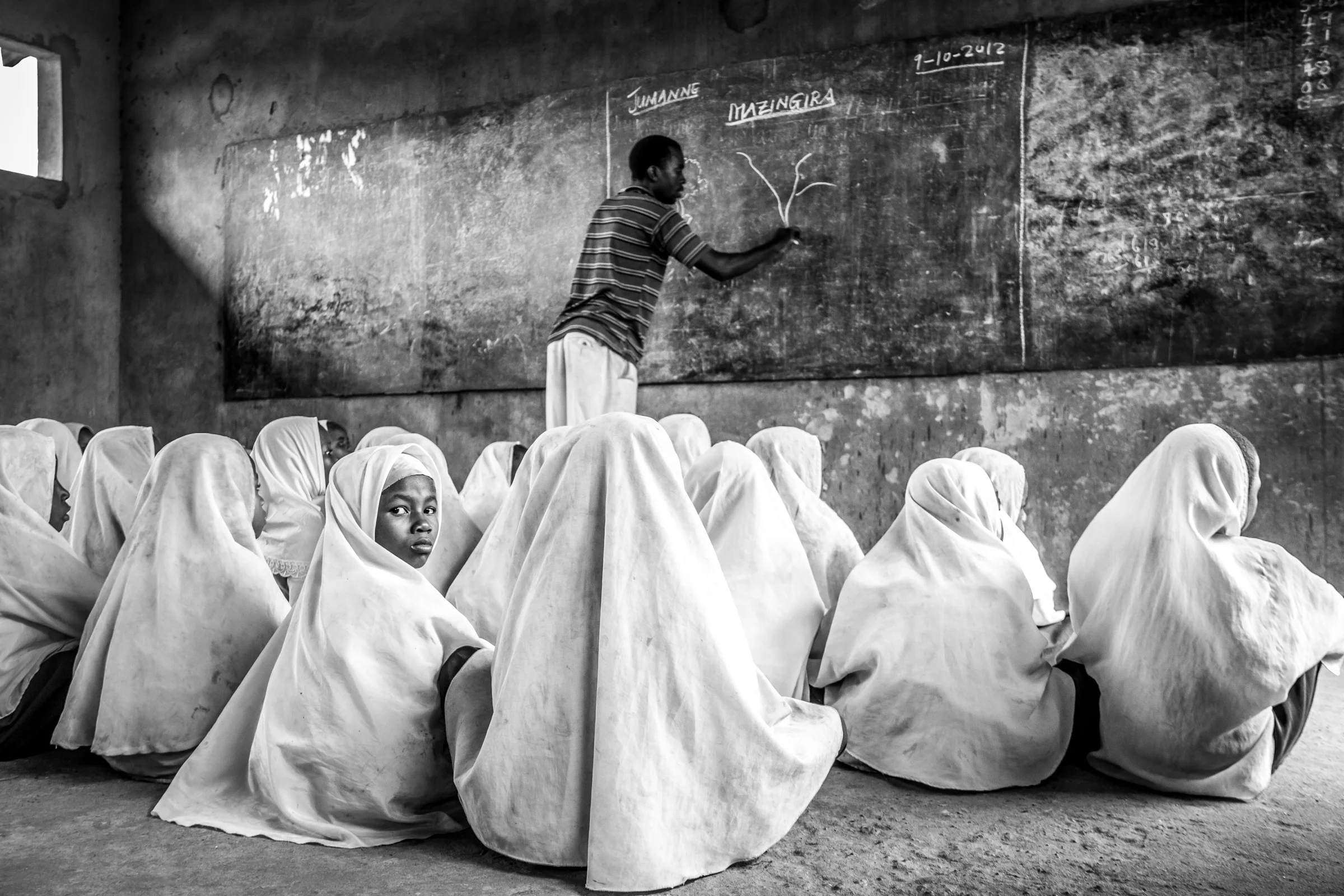
 Open Call 2024Fourth edition
 Open Call 2023Third edition
 Open Call 2022Second edition
 Open Call 2021First edition
