Joseph RodriguezMigrantes 1995-2006
Country
United States
Award
First place, series
Edition
Open Call 2026
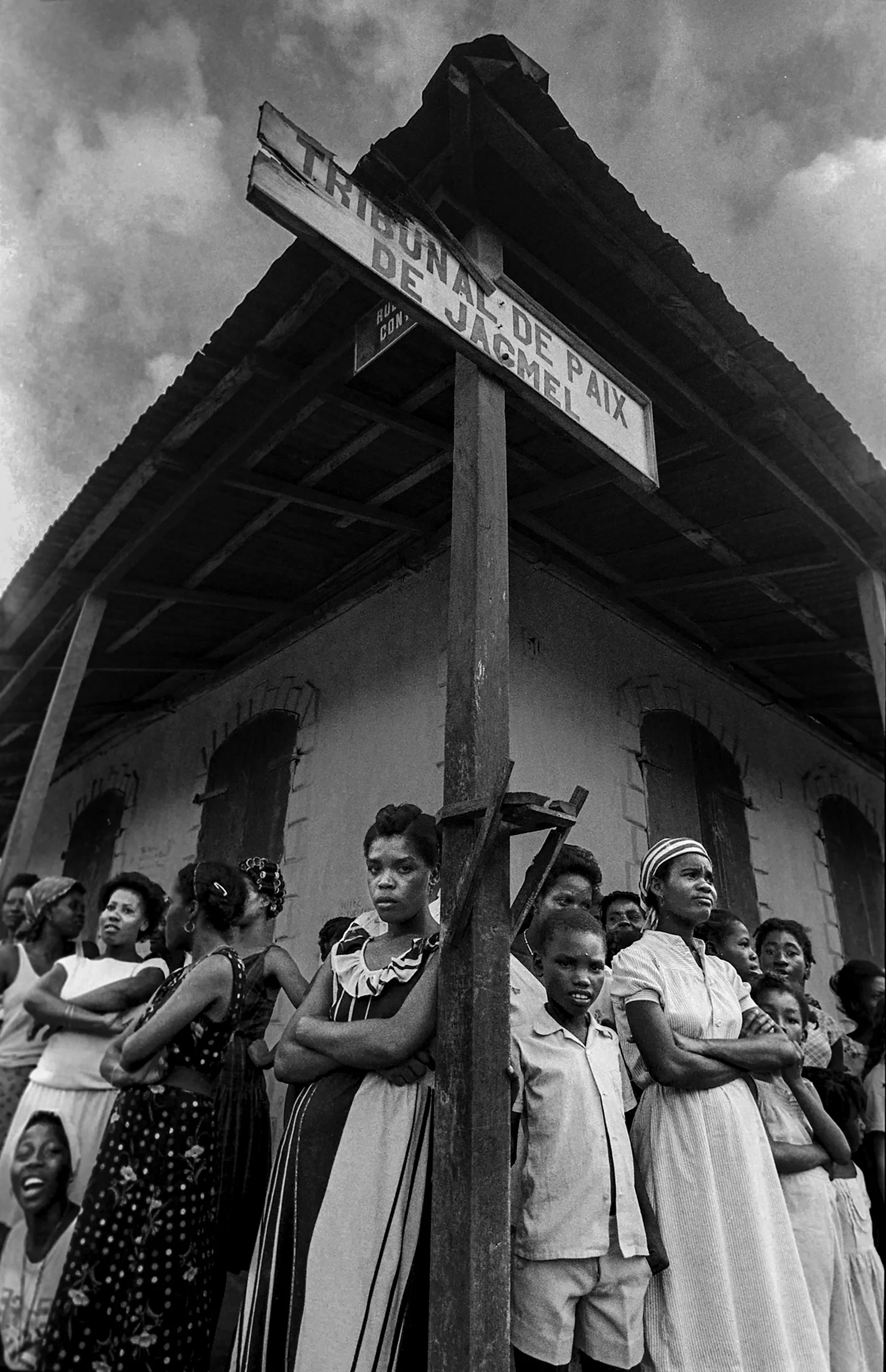
In 1995, photographer Joseph Rodriguez and writer Rubén Martínez began a journey alongside a few families of migrants from the Indigenous village of Cherán, in the Mexican western state of Michoacán. This ethnographic project was loosely modeled upon Walker Evans’ and James Agee’s immersion into the lives of poor white tenant farmers in the Depression-era South. Martínez published a widely-praised work of narrative non-fiction, Crossing Over: A Mexican Family on the Migrant Trail, based upon this research.
Now Rodriguez and Martínez revisit the archive to produce Migrantes, a work of documentary photography whose result is among the most intimate portraits ever recorded of modern Mexican migration to the United States. There is no rhetoric here fulfilling the caricatures of the simplistic binary of American immigration politics: no monster-criminals or hapless victims. What emerges instead in the interplay between image and text is a nuanced narrative “regarding the pain of others” (as Susan Sontag put it), their resilience and perhaps most importantly of all, the minutiae of their everyday lives that make for a three-dimensional, fully human subject.
Migrantes renders an epic visual geography, from a village in the highlands of Michoacán that is at once “traditional” and transformed by migration, to the contested terrain of a militarized U.S.-Mexico border, to several destinations in the heartland of the United States where migrant labor increasingly supports agriculture, service sector jobs and the construction industry.
It is the sudden Mexican presence in what came to be known as “red state” America, the bulwark of Donald Trump’s political power, that is among the most important revelations of Migrantes. The 1990s saw a historic flow of migration from Mexico into areas of the U.S. that hadn’t seen a major demographic shift in several generations.
From tomato farms in Arkansas to greenhouse nurseries in Missouri to the tobacco fields of North Carolina, Migrantes inverts the typical gaze upon the immigrant “other.”
Rodriguez’s and Martínez’s immersion reporting help us to imagine migrant lives, from the inside.
We look back at the 1990s because that’s where the linchpin of America’s political present begins, the origin of a demographic revolution, the rise of the “Latino vote,” what essayist Richard Rodriguez calls the “browning of America” and, of course, Trump’s re-activation of age-old American xenophobia.
Migrantes isn’t an exercise in nostalgia. Every image tells us about where and who we are today as Americans.


Series finalists
Open Call 2026 Tanzir AhmedBangladesh
 Jubair Ahmed ArnobBangladesh
 Masoumeh BahramigorjiFrance
 Susanne BartelsGermany
 Mara De SarioBelgium
 James Whitlow DelanoJapan
 Marina DoctorovaRussia
 Noemi EhratSwitzerland
 Andrea FucàItaly
 Andrei FurneaRomania
 Mahmoud Abu HamdaPalestine
 Hazel HankinUnited States
 Murat HarmanlikliTürkiye
 Dave JordanoUnited States
 Rado KloseUnited Kingdom
 Davide MantovanelliItaly
 Santiago MesaColombia
 Barbara PeacockUnited States
 Harvey SteinUnited States
 Vassilis ZaverdasGreece
Open Call 2026 Sequence

Edited by Marco Savarese
Sequence is issue 24 of Eyeshot Magazine, the series of the Eyeshot Open Call 2026 in a limited edition.
Pre-order