Masoumeh BahramigorjiTears of Motherland
Country
France
Award
Third place, series
Edition
Open Call 2026
When I was a child, my uncle, a hunter, brought a taxidermized flamingo to our home as a gift. I remember the weight of its glassy eyes, it’s impossible stillness. I was afraid of it, yet it never left. Over time, that fear transformed into something deeper, a quiet, persistent dread for the land and water I grew up with, the places that raised me, now vanishing before my eyes.
I grew up by the Caspian Sea, the world’s largest closed lake. The Iranian climate is predominantly arid or semi-arid, shaped by rising water demand, salinization, groundwater overexploitation, and increasingly frequent droughts. The Caspian Sea plays a crucial role in regulating this fragile balance, yet in recent decades its water level has declined rapidly, creating unstable and increasingly vulnerable conditions for surrounding coastal regions.
Miankaleh International Wetland, located in the southeastern part of the Caspian Sea, is one of the most critical and endangered coastal ecosystems. Recognized as a UNESCO Biosphere Reserve, it is among the most significant and diverse wetlands in the world. It provides vital habitat for migratory birds, endangered species, and supports local communities whose livelihoods are deeply tied to its ecological rhythms. Yet today, that rhythm is breaking.
The decline in the Caspian Sea’s water level has drastically reduced inflow to the wetland, causing extensive drying, particularly in its western and northeastern areas. At the same time, rapid urbanization, agricultural expansion, industrial pollution, mismanagement, and excessive river water extraction have intensified the crisis. Recent reports indicate that nearly 30% of the wetland has already dried up.
I have been photographing this region since 2016. These eight years of work, combined with a lifetime of personal connection to this landscape, have shaped my understanding of this unfolding catastrophe. While the immediate effects are visible, the long-term consequences are far more alarming. The ecological impact could be irreversible.
The destruction of this environment threatens not only wildlife and biodiversity, risking the extinction of rare plant and animal species, but also the fragile economies of local communities already facing significant hardship. Beyond its environmental significance, this ecosystem is part of our identity. Watching its disappearance feels like losing a part of myself and my people. I do not stand outside this crisis, I am part of it.
This project is my way of transforming fear into action. Moving beyond scientific data and statistics, Tears of the Motherland seeks to reveal the lived reality of climate change within one of the world’s most vital yet overlooked ecosystems. Miankaleh is both a sanctuary and a lifeline. By documenting its decline, I aim to raise global awareness, contribute to conversations around environmental responsibility, and inspire collective action to protect what still remains.


Series finalists
Open Call 2026 Tanzir AhmedBangladesh
 Jubair Ahmed ArnobBangladesh
 Susanne BartelsGermany
 Mara De SarioBelgium
 James Whitlow DelanoJapan
 Marina DoctorovaRussia
 Noemi EhratSwitzerland
 Andrea FucàItaly
 Andrei FurneaRomania
 Mahmoud Abu HamdaPalestine
 Hazel HankinUnited States
 Murat HarmanlikliTürkiye
 Dave JordanoUnited States
 Rado KloseUnited Kingdom
 Davide MantovanelliItaly
 Santiago MesaColombia
 Barbara PeacockUnited States
 Joseph RodriguezUnited States
 Harvey SteinUnited States
 Vassilis ZaverdasGreece
Open Call 2026 Sequence
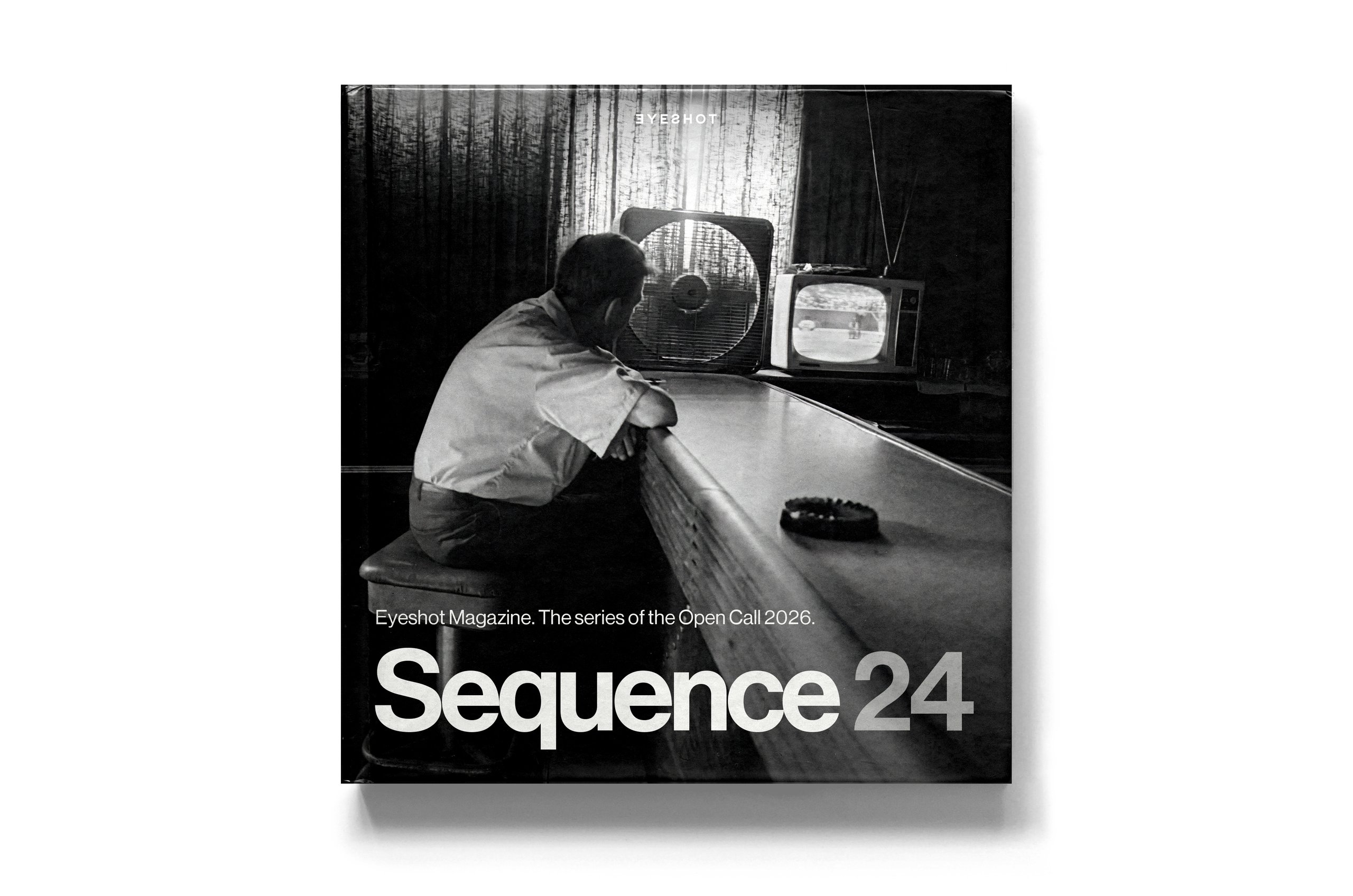
Edited by Marco Savarese
Sequence is issue 24 of Eyeshot Magazine, the series of the Eyeshot Open Call 2026 in a limited edition.
Pre-order