Editor's Note
The Weight of Those You Have Admired121
Photograph
Alex Webb
Written by
Marco Savarese, Editor-in-Chief

Sometimes you can tell, after three photographs, who the photographer has loved most. Every choice, every position, every distance is still measured against that person. The comparison has become involuntary, unconscious perhaps. But it is there, in every frame.
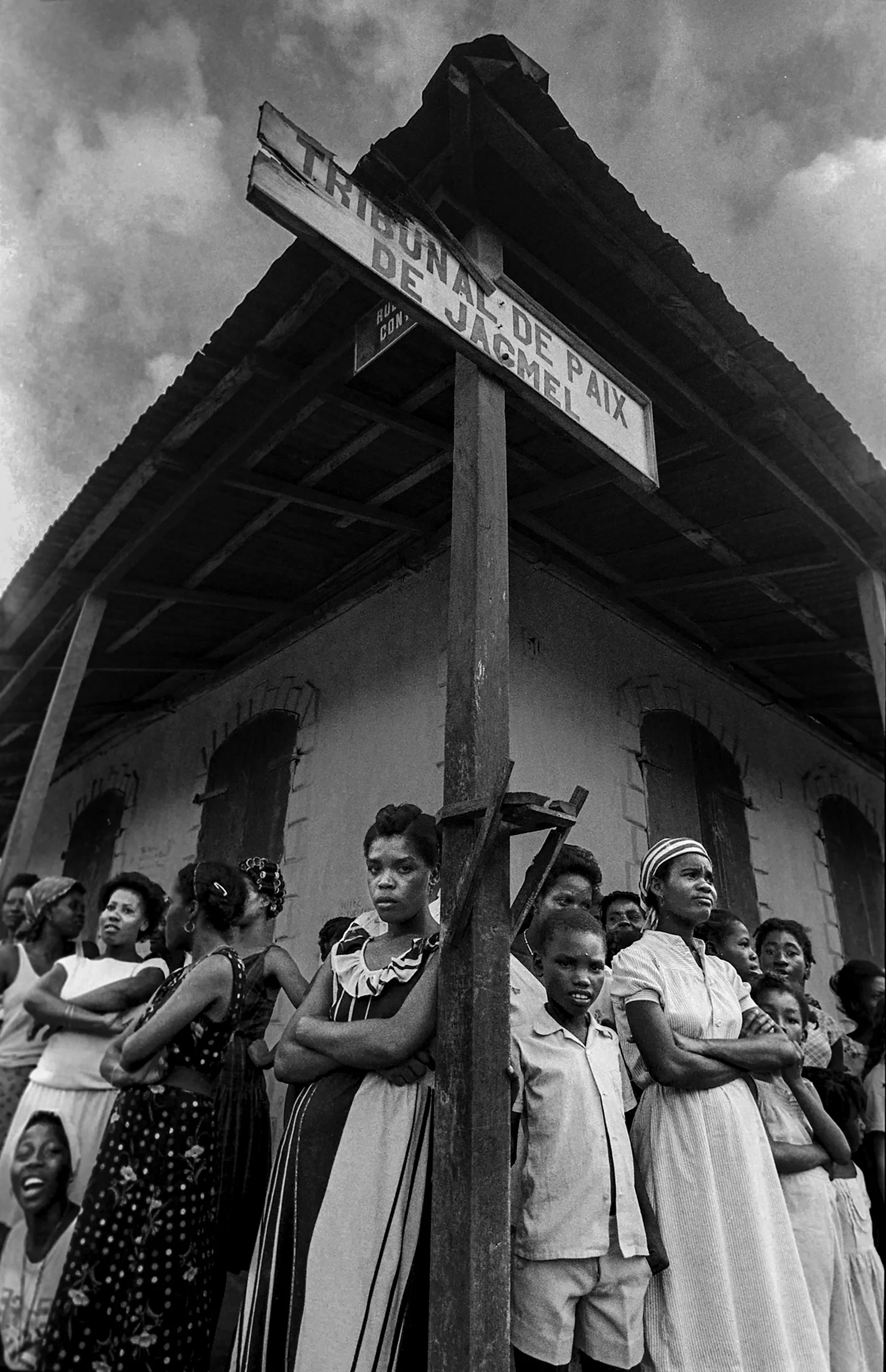
In 1975 Alex Webb was at a dead end. He was photographing the American social landscape in black and white, inside a grammar he had absorbed from Friedlander, Winogrand, Harbutt. Photographers he admired, whose vision he had studied deeply. The photographs came out right, without emotional resonance. That grammar had become a ceiling. The way out came from a place none of them would have photographed in the same way: Haiti. And color. He has not photographed in black and white since.
Absorbing someone else’s work deeply is necessary. It gives you a language you did not have. The problem arrives when you stop using it to explore and start using it to measure yourself, when the question is no longer what do I see but how would he see it.
The signal is precise, even if it arrives slowly. You start discarding photographs not because they are weak. Because they do not look enough like what he would have kept, or because they look too much like it. In both cases you are looking for approval on images he will never see.
At that point you are no longer working with your own material. You are working with theirs. The photographs can still be good, but they are not yours. It takes time to realize it, and honesty to admit it to yourself before anyone else.
Everyone finds their own Haiti. A place, a subject, a time that no one else would have the same reason to photograph, sometimes geographical, more often a way of standing before things.
The weight does not disappear. But at some point you can stop carrying it and start using it.