Editor's Note
To Interact or Not, That Is the Question55
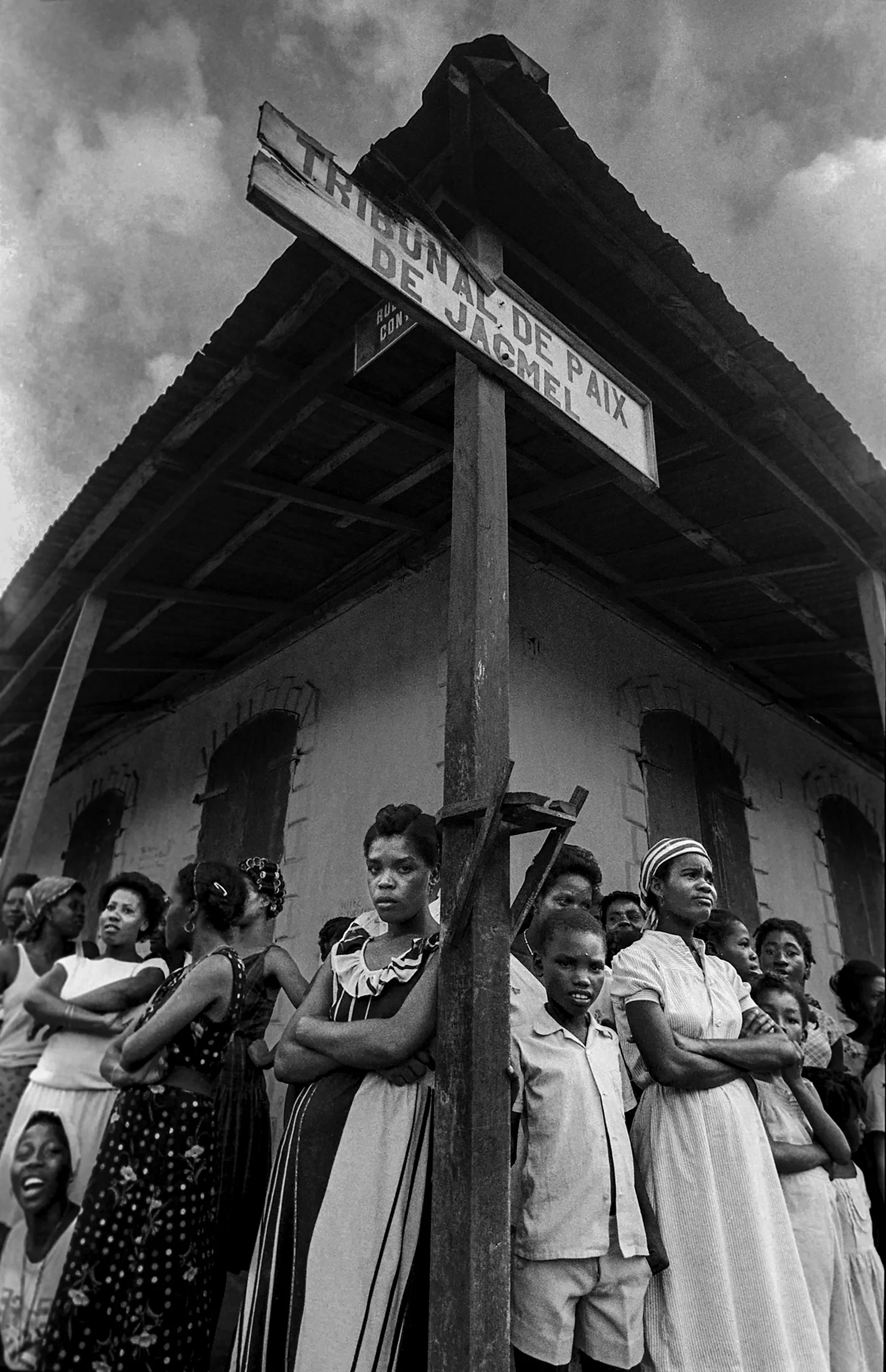
Photograph
Sebastião Salgado
Written by
Marco Savarese, Editor-in-Chief

In street photography, interaction with subjects is often framed as an ethical choice. Getting close, talking, explaining, asking or the opposite: remaining invisible, not interfering, not disturbing. But setting the issue up in these terms is reductive. Because interaction is not a moral rule, it’s a position.
Saul Leiter, for instance, always rejected the idea of the photographer as a universal witness or an interpreter of social reality. He didn’t photograph people to “represent” something, nor to tell a collective story. He photographed because something, for a moment, struck him visually. The figures that enter his images are not examples, not symbols, not carriers of a message but presences, parts of a composition, or elements that exist without needing to be explained.
This approach unsettles a certain comforting idea of photographic ethics. Because it suggests that respect does not necessarily pass through dialogue, nor through explicit interaction. It passes through how you use the image. Through whether you are instrumentalizing the subject to support a thesis, a narrative, a position that does not belong to them. Not interacting does not mean taking. Just as interacting does not automatically mean giving back.
The problem arises when interaction becomes an alibi. When it serves to legitimize weak images. When “I talked to them” becomes a narrative justification rather than a real choice. In the same way, non-interaction can also become a shortcut, a way to avoid confrontation, to stay safe behind distance. In both cases, it’s not the gesture itself that makes the difference. It’s the intention behind it.
As an editor, I’m not interested in whether a photographer spoke to the subject or not. I’m interested in whether that image would still make sense without the story that accompanies it. Whether it holds up without explanation. Whether it doesn’t reduce a person to a visual function or to ethical proof. That’s where responsibility is at stake, not before.
Interacting or not interacting is not the right question. The question is another, and it’s more uncomfortable: are you photographing someone to better understand the world, or to feel more at ease with yourself?
And it’s a question that no technique, no method, no label can avoid.