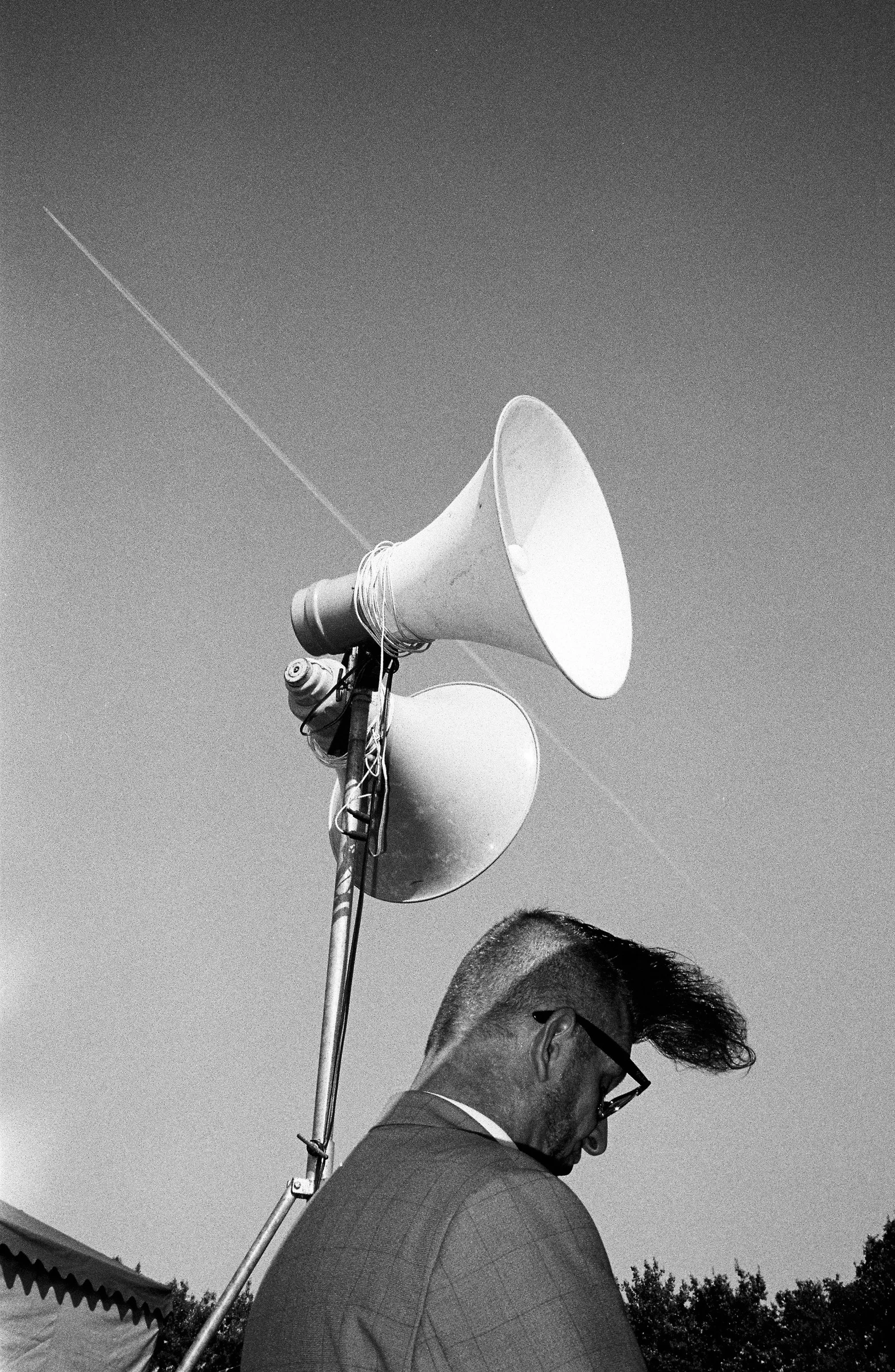
Editor's Note
Two Whites That Look the Same196
Photograph
Mario Giacomelli
Written by
Marco Savarese, Editor-in-Chief

There’s always a moment, looking through your photos, when you apologize for a white. A window that ate the room, a sky without a grain of detail, a shirt that is only light. You call it a mistake before you even ask whether it is one. You were taught that good exposure holds everything, from shadows to highlights, and that a full white is the mark of someone who can’t read a scene.
But exposure is a chain of decisions about what the eye should read. Blowing a white is one of them, and it means choosing that there, in that spot, nothing is seen. Sometimes that nothing is the point: the light pouring in and erasing, the body dissolving into the glare. You’re subtracting, and you decided the subtraction. It’s the same gesture with which you choose what to leave out of the frame, moved inside the light.
The trouble is that two full whites, on the screen, look the same. In one the light is the subject, the scene dissolves into it, and recovering it makes the image collapse. In the other you simply lost control, you were chasing the face and the background went, and you’d pull it back at once if you could. The same flat 255. What changes is whether that white is doing a job.
So before you drop the highlights by reflex the moment the warning blinks, stop on one question. What holds the photo up, the detail you recover or the white that stays. Pull the highlights all the way down and watch the image turn readable, then ask whether you gained anything. If it’s the detail, take it back, it was an accident. If it’s the white, that glare is the subject, and you defend it.
Almost no one fails because of a white. They fail because they don’t know which of the two they have, and they decide it by moving a slider instead of looking at it on the table. A shirt that is only light, that you would defend in front of anyone, is worth more than a correct gray you don’t need. Before you recover, look at what dies if you do.