Editor's Note
Your Feet Are Still on the Old Lens128
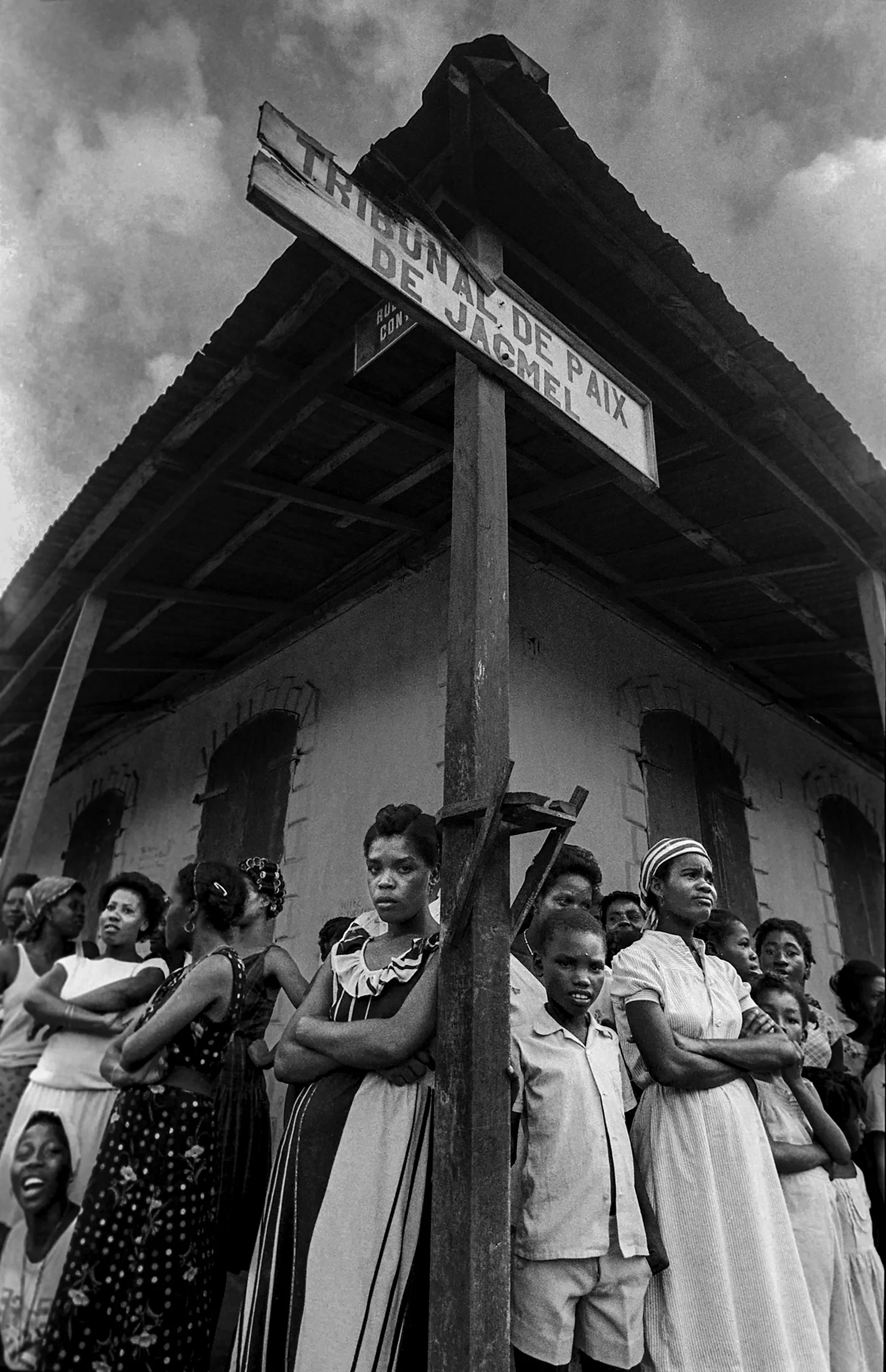
Photograph
Constantine Manos
Written by
Marco Savarese, Editor-in-Chief

When I look at a portfolio and something breaks halfway through, it is almost always a focal length change. The first twenty photos have a precise rhythm, a distance from the subject that repeats like breathing. Then the photographer switches lenses and everything falls apart. The framing becomes uncertain, subjects float in the frame, the space around them is too much or too little. It is not a lens problem. The body no longer knows where to stand.
A focal length is not a number printed on a lens. It is a physical distance the body has memorized after thousands of shots. Two steps, an outstretched arm, the exact point where you stop without thinking. When you change focal length, that distance no longer works. With a 35mm you stand a meter and a half away and the subject fills the frame. Switch to 28 and at the same distance the subject gets lost. You have to halve the space, step into the personal zone of the person in front of you, and your body resists because for years it did the opposite.
Constantine Manos, who worked with 28, 35, and 50, described a specific exercise: before bringing the camera to your eye, try to predict what you will see inside the rectangle. Then look through the viewfinder and compare. The distance between what you imagined and what you find is the exact measure of how foreign that focal length still is to you. Manos repeated this comparison until prediction and framing matched. Only then had the focal length become his own.
Whoever changes lenses thinking they are changing perspective is skipping a step. Perspective does not change with the focal length, it changes with your feet. And the feet have to relearn everything: where to stop, how close to get, when the subject carries the right weight inside the rectangle. If you changed your focal length and your photos are not working, the problem is not the new lens. Your feet are still on the old one. Go out, shoot, and every time pause for a second before raising the camera. Predict the frame. Then check.
More notes
Written by Marco Savarese, Editor-in-Chief The Photo Doesn’t Remember What You Felt127
 Out of Focus Is Not Out of Control126
 What’s Missing from My Work?125
 The Failure That Outlasts Its Flaws. W. Eugene Smith, Pittsburgh, 1955-1958123
 The Weight of Those You Have Admired121
 When No One Is Watching119
 The Same Photograph Doesn’t Exist118
 If You Straightened It, What Would Remain?114